ServicesCommercial Roofing
Commercial Roofing in Signal Hill
We repair, restore and replace low-slope roofs on retail spaces, offices, warehouses and small industrial buildings. You get a clear account of what is failing and why, the options that fit your building and budget, and work planned around the people inside.
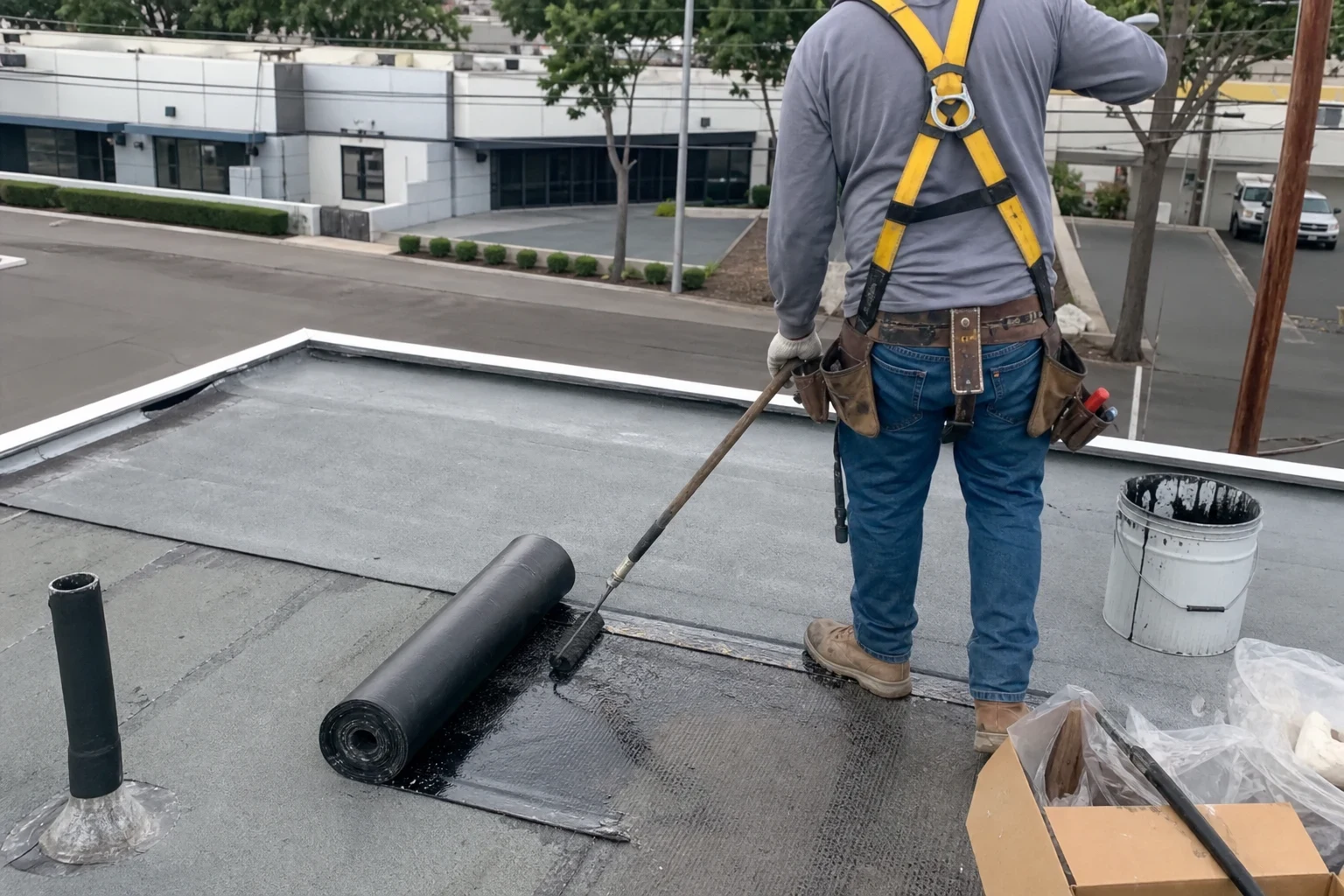
What we do on commercial roofs
Most commercial buildings here sit under a low-slope roof: built-up tar and gravel, modified bitumen, or a single-ply membrane such as TPO. These roofs fail differently from a pitched shingle roof. Water doesn't run off quickly, so small faults at seams, drains and rooftop equipment turn into leaks that travel before they show up on a ceiling tile.
Our job is to find the actual cause, then tell you plainly whether a repair, a coating over the existing roof or a full replacement makes sense. As a GAF Certified Contractor, we install GAF commercial membranes and work to their published installation details.
Sometimes the right answer is the smallest one. If a few seams and a rusted drain ring are the problem, that is what we quote.
What the work includes
- Roof survey and moisture check
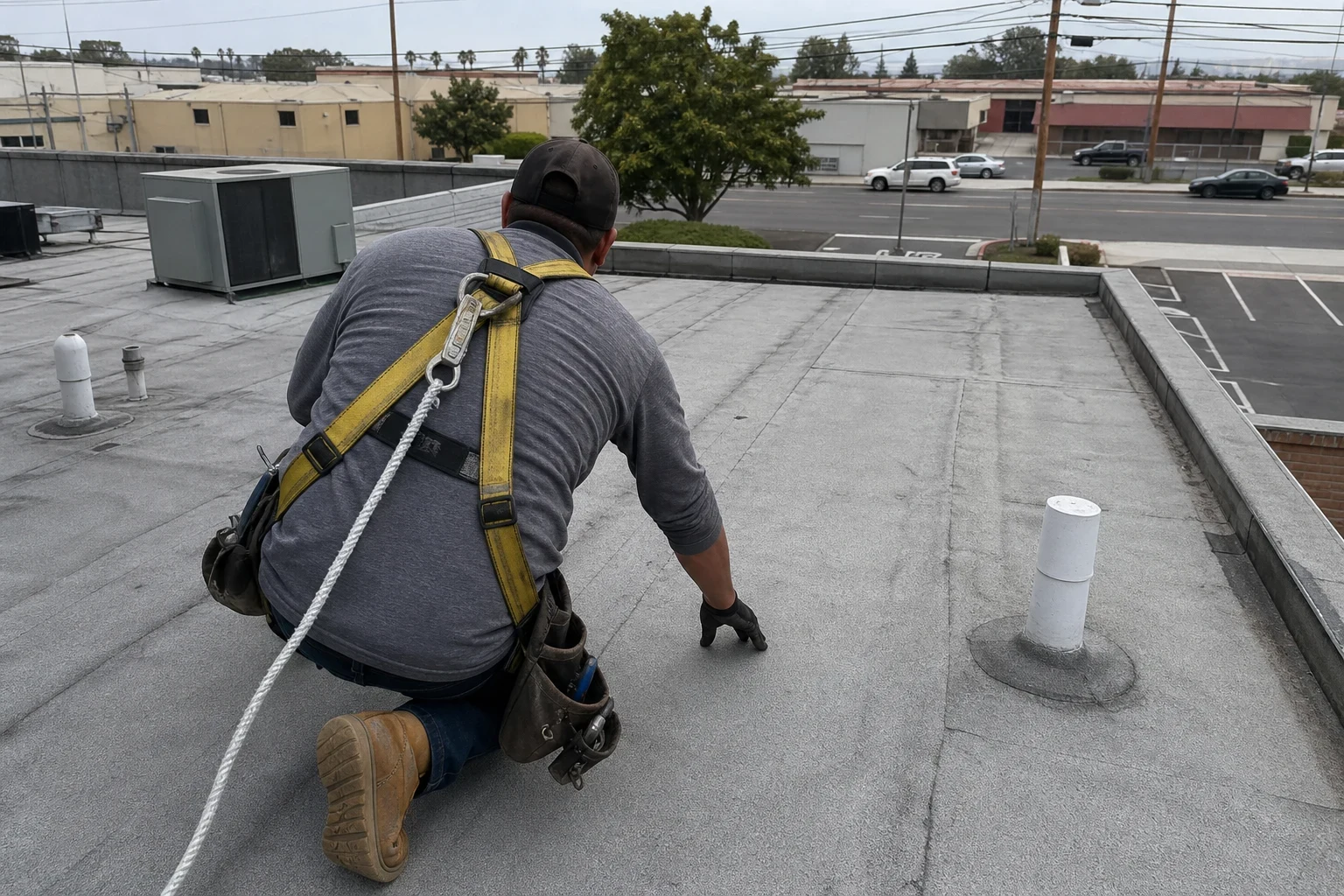
- We walk the whole roof, probe soft areas and check the insulation underneath for trapped water. You get photos of what we found, marked by location.
- Seam, flashing and penetration repair
- Open laps, cracked flashing at parapet walls, and pitch pans around pipes and conduit are the usual leak points. We rebuild them with materials compatible with your existing membrane.
- Drains, scuppers and ponding
- Clogged drains and low spots that hold water for days shorten a roof's life. We clear and reset drains, and can add tapered insulation or crickets so water moves toward them.
- Roof coatings
- On a sound roof with dry insulation, a reflective coating can add years of service and cut heat gain. We only suggest it after the moisture check confirms the roof underneath is worth keeping.
- Full replacement
- When the membrane is worn out or the insulation is saturated, we tear off, replace damaged decking and insulation, and install a new single-ply or modified bitumen system. We pull the city permit and schedule the inspection.
- Gutters and edge metal
- New edge metal, gutters and downspouts are fitted with the roof so water leaves the building cleanly. See our Gutters page for more detail.
Signs your commercial roof needs attention
Stained ceiling tiles
A brown ring on a drop ceiling usually means water has been getting in for a while. The source is often several feet away from the stain.
Water standing after rain
Puddles that remain two days after a winter storm stress seams and feed algae growth. They also add weight the structure wasn't designed to carry for long.
Blisters, bubbles or alligatored surface
Blisters in built-up or modified roofs mean moisture or air is trapped between layers. A cracked, scaly surface means the top layer has dried out under years of sun.
Shrinking or pulling membrane
Older single-ply roofs can pull away from walls and curbs, leaving the flashing stretched tight. Once it tears, water goes straight in.
Leaks around rooftop units
HVAC curbs and condensate lines are common trouble spots, especially after a unit has been swapped and the flashing was disturbed.
What moves the price
Commercial roof pricing depends far more on what is under the surface than on square footage alone. We price after the moisture check so the estimate reflects the roof you actually have. Financing is available through Service Finance Company, subject to credit approval.
Wet insulation
Saturated insulation has to come out. The amount of it is often the biggest difference between a coating job and a tear-off.
Membrane type
TPO, modified bitumen and coatings differ in material cost, labor and expected service life. We show you the tradeoff for each.
Rooftop equipment and penetrations
Every HVAC curb, vent, skylight and conduit run needs its own flashing detail. A busy roof costs more than an open one of the same size.
Energy code and permits
California's energy code often requires a reflective cool roof surface when a low-slope roof is replaced. That and the permit are built into the estimate, not added later.
Access and logistics
Building height, crane or hoist needs, and work limited to off-hours all affect labor time.
How a commercial job runs
- 1
Inspection on the roof
We look at the membrane, drains, flashings and interior stains, and take photos. If there's an insurance claim involved, we can work directly with it and document damage for the adjuster.
- 2
Written estimate
You get a line-item estimate that separates repairs from replacement, with the options side by side. We explain what each choice buys you in years and in risk.
- 3
Scheduling around your business
We plan noisy work, tear-off and material deliveries around your hours and your tenants. Torch work, if needed, is scheduled with fire safety steps in place.
- 4
Installation and daily protection
Any roof area opened in a day is closed and watertight before we leave. Entrances and parking areas below stay clear of debris.
- 5
Final walk and records
We walk the finished roof with you, hand over photos and product details, and arrange the city inspection when a permit applies.
Commercial roofing questions
Can my roof be coated instead of replaced?
Often, yes, if the membrane is intact and the insulation is dry. A coating over wet insulation traps the water and fails early. We check moisture first, then tell you which option is honest for your roof.
Do we have to close while you work?
Usually not. Most repairs and many replacements happen while the business stays open. We plan noisy work and deliveries around your hours and keep entrances clear.
What type of membrane do you recommend?
It depends on the building. TPO is reflective and works well on open roofs, while modified bitumen holds up well to foot traffic around equipment. We'll explain why one suits your roof better than the other.
Will you help with an insurance claim?
Yes. We work directly with your insurance claim and record the damage with dated photos and roof measurements. We can also be there when the insurer sends someone out to look. What gets covered is the insurance company's call; our part is making the roof's condition easy to see and understand.
Do you serve buildings outside Signal Hill?
Yes, we work on commercial roofs in Long Beach, Carson, Lakewood and other nearby cities. Service is available in English and Spanish.
Find out what your building's roof needs
We'll inspect the roof, show you the photos and give you a written estimate with your options laid out. No pressure, and no cost for the visit.