ServicesRoof Inspections
Roof Inspections in Signal Hill
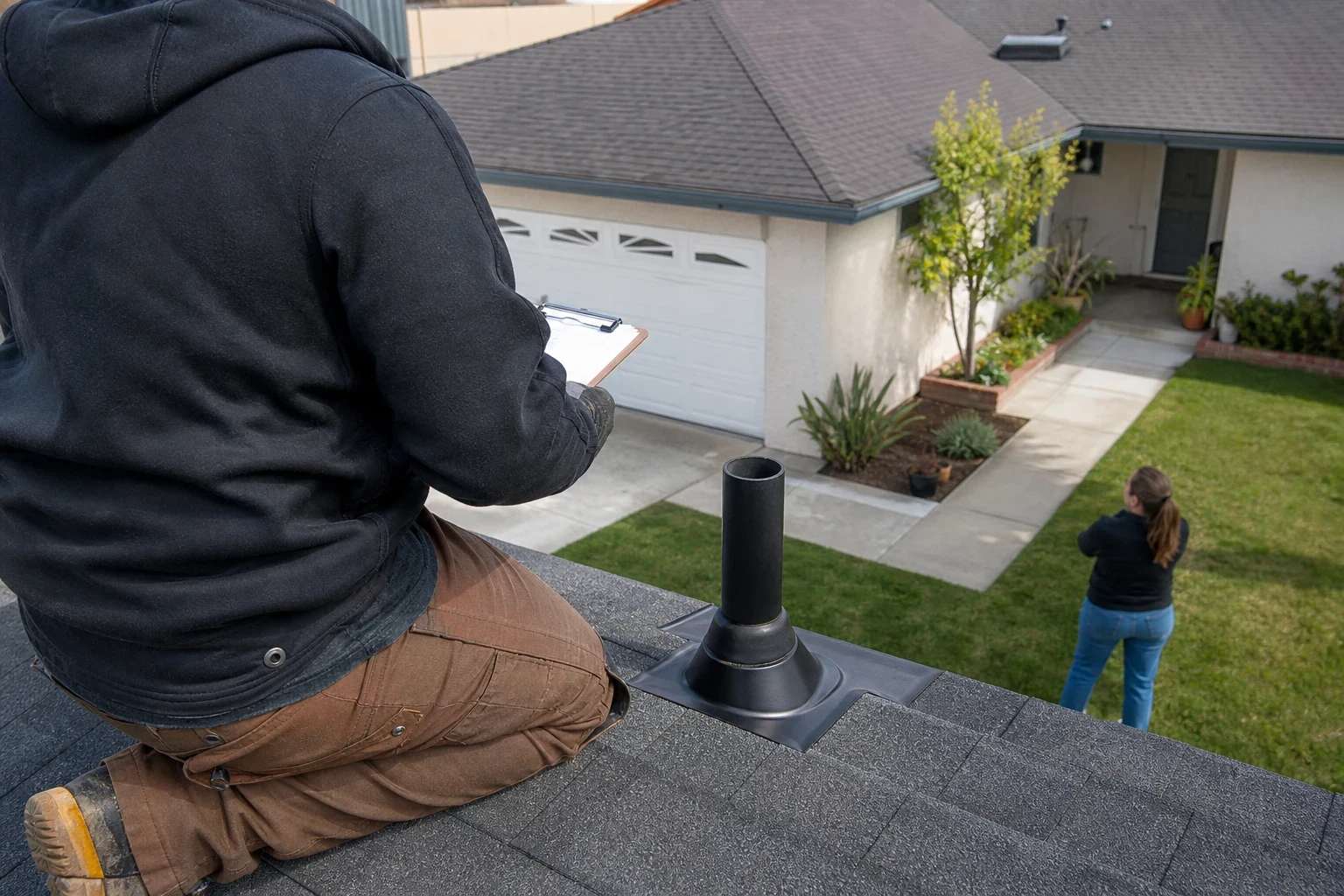
A roof inspection shows you the real condition of your roof, the cause of any trouble and what a fix would involve. We walk each slope, look inside the attic when there is access, photograph every problem and talk you through each one in plain terms.
What an inspection is for
Most roofs fail slowly. A cracked tile, a lifted shingle or a seam pulling apart on a flat section can let water in for a whole rainy season before a stain ever shows on the ceiling. An inspection finds those problems while they are small and still inexpensive to correct.
Good times to book one: ahead of a home purchase or sale, after a strong winter storm, once a roof reaches fifteen or twenty years, or whenever you suspect a leak you cannot see. An inspection is also where any repair-or-replace decision should start. You come away with photos, a clear account of what we saw and a direct answer on whether anything needs doing now, later or not at all.
Steady sun and salty marine air are hard on sealants, metal flashing and older underlayment here, so those are the places we look at most closely.
What we check on every inspection
- The roof surface
- On shingle roofs we look for granule loss, curling, cracks and lifted tabs. On tile we look for cracked, slipped or missing pieces. On flat sections we check for blisters, ponding water and open seams.
- Flashing and penetrations
- Chimneys, wall joints, skylights and vent pipes are where most leaks begin. We check the metal for rust and lifted edges and the sealant for cracking or shrinkage.
- Underlayment and decking
- Under a tile roof, the underlayment does the real waterproofing, and it usually wears out long before the tile does. Where a tile can be lifted safely, we look beneath it. We also feel for soft decking underfoot, which points to rot.
- Gutters and drainage
- Clogged or sagging gutters can push water back under the roof edge. We check the gutters, downspouts and drip edge and note anything that belongs on our Gutters page rather than the roof itself.
- Attic and ventilation
- From inside, where access allows, we look for water stains, daylight through the boards and damp insulation. We also check whether the attic has enough intake and exhaust venting, since trapped heat shortens a roof's life.
- Photos and a written estimate
- Every issue we find is photographed so you can see it for yourself. If work is needed, you get a free written estimate with each item listed separately.
When your roof is due for a closer look
Water marks indoors
A brown ring overhead, however pale, tells you moisture has already made it past the roof and into your home. Where it got in is often a few feet uphill from where it shows.
Grit collecting in the gutters
Aging shingles let go of their protective granules. When that sandy grit piles up in the gutters or at the foot of a downspout, the shingles are usually wearing thin.
Broken or shifted tiles
Any damaged tile you can see from the yard tends to have company higher up. Wherever a tile has moved, the underlayment beneath is left exposed to sun and rain.
Age past fifteen years, or unknown
If your roof has passed the fifteen or twenty year mark, or nobody knows when it was installed, a first full inspection gives you a baseline and a fair idea of the years it has left.
A strong wind or a long soaking
Winter storms can loosen flashing and raise shingle edges without leaving anything obvious behind. Catching that early means the next rain does not find it first.
Buying or selling
A roof-only inspection goes further than the general report a home inspector prepares. Both sides can then work from the same photos and notes.
How the inspection goes
- 1
A short phone call
We ask about your roof's age, its material and anything that worries you, then set a time that suits you. Se habla español, so the call and the visit can be in English or Spanish.
- 2
On the roof
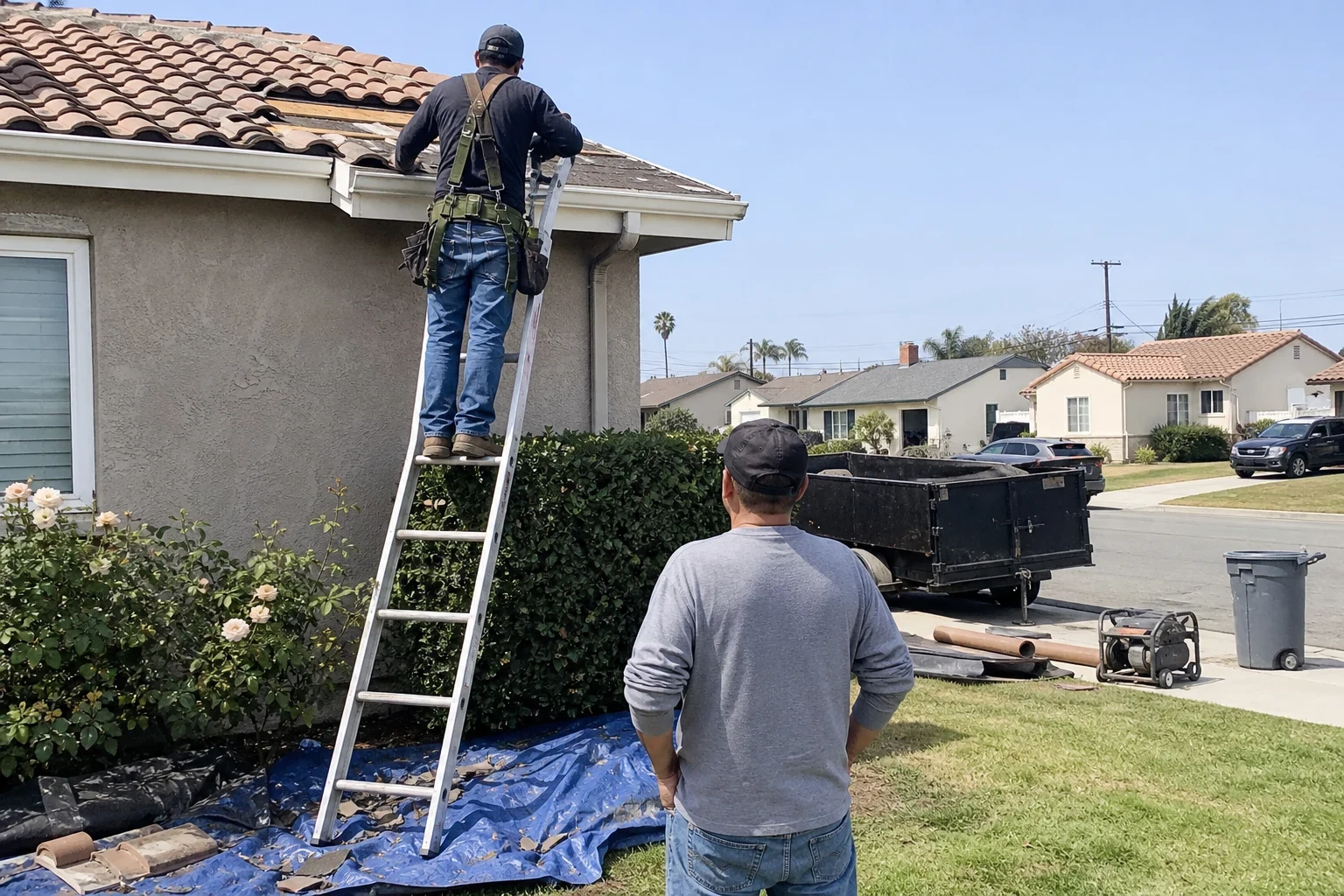
We walk the roof where it is safe to do so. Tile breaks easily underfoot, so on tile roofs we step only on supported points and use close-up views from the ladder where walking would cause damage.
- 3
Attic and gutters
Where there is attic access, we check the underside of the roof deck and the ventilation, then finish with the gutters and downspouts.
- 4
Findings, explained
We sit down with you, go through the photos and sort what we found into what needs attention now, what can wait and what to keep an eye on. If work makes sense, you get a free written estimate. There is no pressure to decide on the spot.
What moves the cost of any work we find
The inspection itself costs nothing. If it turns up work, the price depends on a few clear factors, and we show each one on the written estimate. Financing is available through Service Finance Company, subject to credit approval.
- Roof material
- Resetting a few tiles, replacing a section of shingles and patching a flat membrane are very different jobs with different material costs.
- How far the damage goes
- One loose piece of flashing is a small repair. Worn underlayment across a whole slope is a larger one, and sometimes the point where replacement makes more sense.
- What is underneath
- Rotted decking or failed underlayment is not always fully visible until the roof is opened. We note on the estimate anything that could change once work begins, so a change does not come as a surprise.
- Access and pitch
- Steep slopes, second stories and narrow side yards take more time and safety equipment to work on.
- Permits
- Larger repairs and replacements usually need a city permit. When one is required, we pull it and schedule the inspection.
Roof inspection questions
Something not covered here? (562) 662-7493
What does the inspection cost?
Yes. There is no charge for the inspection and no obligation afterward. If we find work that needs doing, the written estimate is free too.
How long does a roof inspection take?
Most single-family roofs take an hour or two, depending on size, pitch and whether we can get into the attic. Tile and multi-level roofs tend to take longer because we move more carefully.
Will walking on my tile roof break tiles?
It can if it is done carelessly, which is why we step only where the tile is supported and avoid walking where we can see well enough from the ladder. If a tile is already cracked, we point it out and photograph it before anyone touches it.
Can an inspection help with an insurance claim?
It can. Our photos and notes give you a clear record of the damage and its likely cause, and we work directly with your insurance claim. The adjuster makes the coverage decision, but you will go into that conversation knowing what is on your roof.
Is an inspection just a way to sell me a new roof?
No. When a repair will hold for years, that is what we recommend and price. If replacement is the better value, we show you why with photos, and as a GAF Certified Contractor we can explain the GAF roofing systems covered on our Roof Replacement page and in person.
Do you inspect flat roofs and older roofs?
Yes. We inspect shingle, tile and flat roofs, including older roofs with layers of past patches. Flat sections get extra attention at seams and drains, where water tends to sit.
Know where your roof stands
A free inspection gives you photos, plain findings and a clear sense of what comes next. If nothing needs doing, we will tell you that too.