ServicesRoof Leak Repair
Roof Leak Repair in Signal Hill
A stain on the ceiling rarely sits under the actual hole. We trace the water back to where it enters, show you what we found in photos, and repair the cause with matching materials so the fix holds through the next rain.
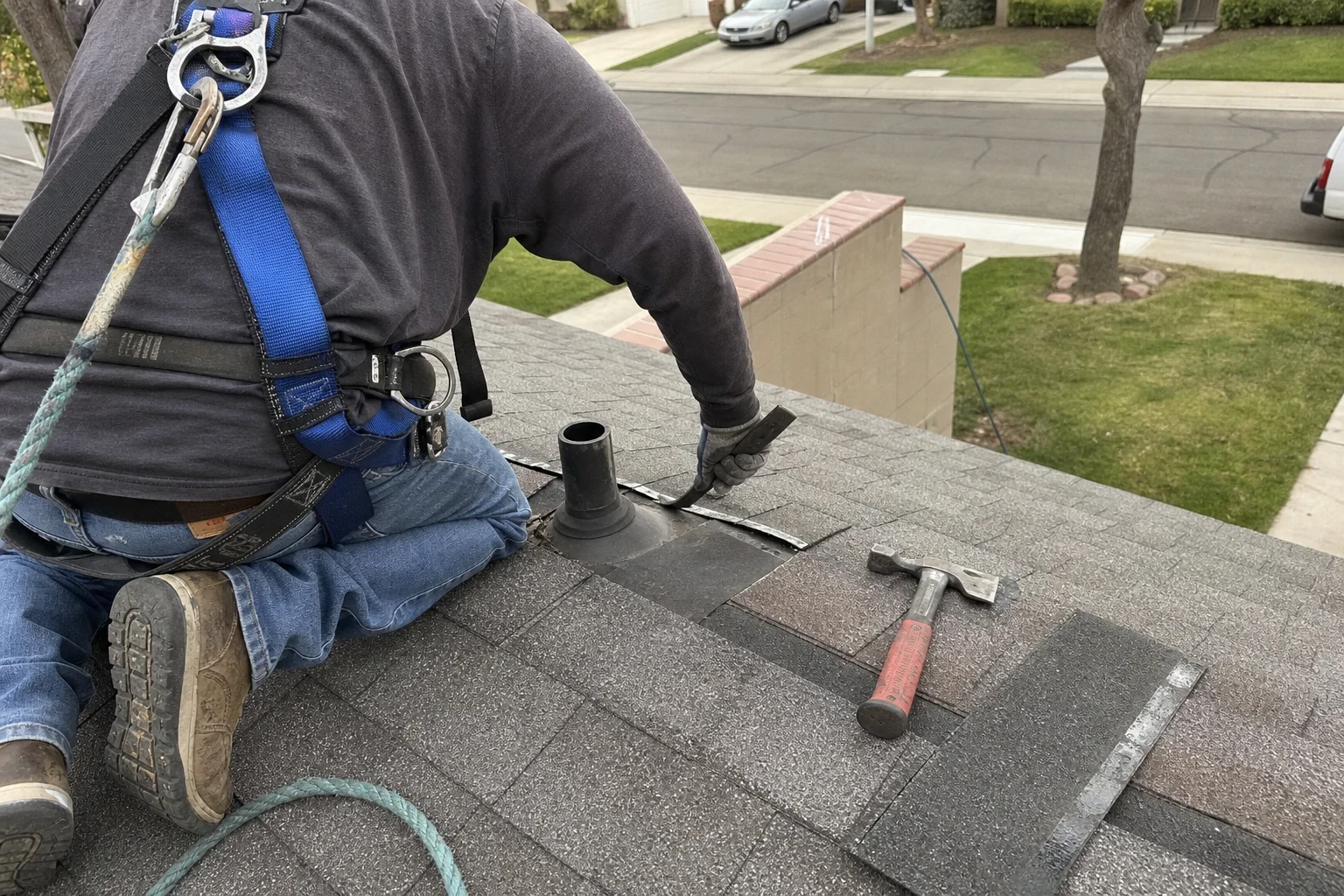
Finding the Source Before We Fix Anything
Water moves. It runs along the underlayment, follows a rafter, and drips wherever gravity finally wins. That is why patching the spot above a stain so often fails. We start at the stain, work upward and outward, and look for the opening that actually lets water in.
Most leaks come from a short list of places: flashing around chimneys and walls, cracked pipe boots, slipped or broken tiles, worn valleys, and seams on low-slope sections. Here, months can pass between rains, so a small opening can stay hidden until the first winter storm. Once we know the cause, we tell you what it will take to fix it, what it costs, and whether repair is still the sensible choice for your home.
What Your Leak Repair Covers
Checking inside and in the attic
We start at the stain, then look at the framing and decking above it from the attic if we can get in. Water marks on the wood often lead right to where the water enters.
Tracing on the roof
Up top, we check each possible route above the leak: valleys, fasteners, flashing and penetrations. On tile roofs, we lift tiles to examine the underlayment, which handles most of the waterproofing.
Pictures and a clear account
We go over the photos with you, point to the part that failed and explain what made it fail, so you see exactly what we saw.
Fixing the cause
Instead of covering the failed part with sealant, we replace it. Depending on the leak, that might be new step flashing, a fresh pipe boot, new underlayment beneath reset tiles or a correctly lapped patch on a flat area. We are a GAF Certified Contractor and install materials suited to your roof using the manufacturer's method.
Clearing up
We take away the old flashing, nails and broken pieces, and sweep the ground around the house before leaving.
How to Tell Water Is Getting Through
Marks on ceilings or walls
A brown ring that spreads after each rain is the most obvious clue. A stain that has dried still tells you water came in at some point.
Wet or darkened wood in the attic
Dark streaks, soft areas or a musty odor in the attic frequently appear before a ceiling shows anything.
Paint bubbling high on the walls
Blistered paint near the top of a wall or around a skylight can mean moisture is working in behind it.
Broken or shifted tiles
One cracked tile leaves the underlayment open to sun and rain. When that layer wears down, water gets in.
Loose flashing or aging caulk
On older houses, water often enters where flashing has separated from a wall or caulk has dried, cracked and shrunk.
Leaks only in hard rain
When a leak shows up only with wind-driven rain, the cause is usually a valley or flashing, not the open area of the roof.
How the Visit Goes
- 1
You call and describe the leak
Tell us where the stain is and when it shows up. That helps us plan where to look first.
- 2
We trace and document
We check inside and on the roof, take photos, and confirm the cause. If we cannot be certain, we say so and explain what would confirm it.
- 3
You get a written estimate
The estimate lists the repair, the materials and the cost, free of charge. If repair no longer makes sense, we tell you why and what the alternatives are.
- 4
We make the repair
Most leak repairs take a few hours. We protect plants and walkways below, match your existing roofing as closely as we can, and clean up when we finish.
What Moves the Cost of a Leak Repair
Price depends on what failed and what it took to reach it. A cracked pipe boot is a short job. Flashing tied into a stucco wall takes more care and more time. We give you the number in writing before any work starts.
- Roof type
- Tile takes longer than shingle because tiles must be lifted, stored and reset without breaking. Flat roofs depend on the membrane and its seams.
- Hidden damage
- If water has soaked the decking, the rotted wood has to be replaced. We show you photos before adding anything to the job.
- Location and access
- Leaks at chimneys, skylights or where a roof meets a wall involve more flashing work than a leak in an open field of shingles.
- Matching materials
- Older or discontinued tiles can be harder to source. We will tell you how close a match we can get.
Questions About Leaks
Something not covered here? (562) 662-7493
Can't you just patch the roof right above the stain?
Not usually, since the opening is seldom directly over the stain. Water moves before it drips. Locating the real entry point first means you pay for one repair, not a string of them.
Will fixing the leak do, or is it time for a new roof?
On a roof in good condition, most leaks can be fixed. Once the underlayment is breaking down over wide areas or new leaks keep popping up, repairs are no longer a good use of money. We tell you which applies and why, and our Roof Replacement page explains that path.
Does insurance pay for leaks?
That depends on what caused it. Sudden damage from wind or a falling branch is often covered, and gradual wear generally isn't. We work directly with your insurance claim with photos and notes, and your adjuster decides on coverage.
What does fixing a tile roof leak involve?
We lift the tiles surrounding the leak, put in new underlayment or flashing where the old has worn out, and lay the tiles back down. Any broken tiles are replaced with the nearest match we can find. Our Tile Roofing page explains how these roofs are put together.
Can I finance a bigger repair?
Yes. Financing is available through Service Finance Company, subject to credit approval. We are happy to go over it by phone in English or Spanish.
Find Out What Is Causing Your Leak
We serve Signal Hill, Long Beach, Lakewood and nearby cities. Tell us where the water shows up, and we will set a time to trace it and give you a written estimate.