ServicesTile Roofing
Tile Roofing in Signal Hill
Clay and concrete tile can outlast the people who installed it. The layer underneath usually can't. We repair broken tile, relay roofs over fresh underlayment and install new tile, and we tell you plainly which of those your roof needs.
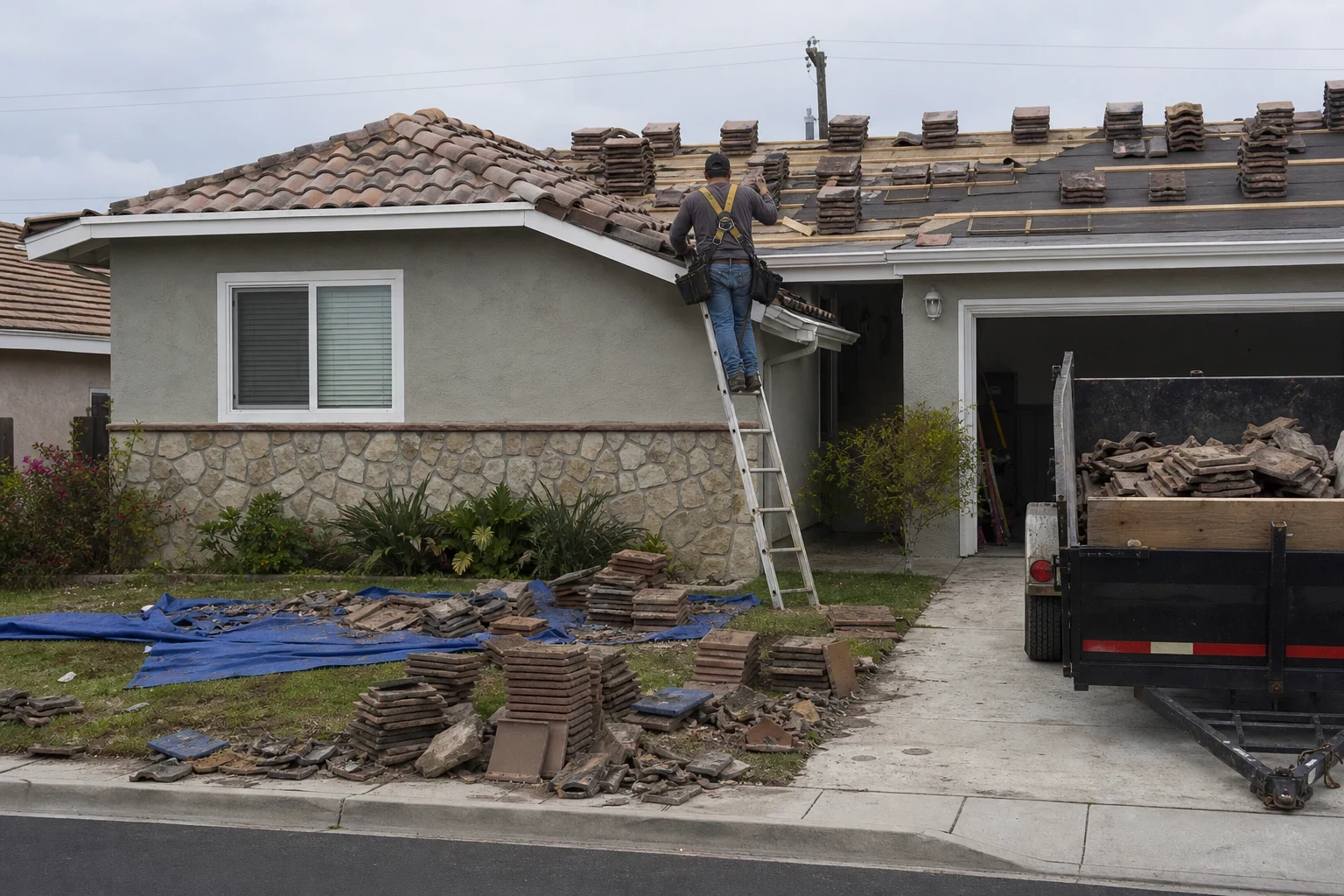
What Tile Roof Work Really Involves
A tile roof is two systems. The tile on top sheds most of the water and handles the sun. The underlayment below is the real waterproofing, and it is the part that wears out. When a tile roof leaks, the cause is usually tired underlayment, a cracked tile, or flashing that has rusted or slipped.
That matters for your budget. Many tile roofs do not need new tile at all. If the tiles are sound, we can lift them, replace the underlayment and flashing, and set the same tiles back down. If the tiles are brittle, discontinued or badly broken, new tile is the better answer, and we will say so and show you why.
Southern California's long dry seasons are hard on underlayment, then the first winter rains find every weak spot at once. We look at both layers before we recommend anything.
What Our Tile Roof Work Includes
- Broken and slipped tile replacement
- We replace cracked, chipped or slipped tiles with matching profiles and colors, and we fasten them the way the rest of the roof is fastened. Where an exact match is no longer made, we pull matching tiles from a less visible slope and put the closest new tile there.
- Lift and relay
- We remove the tile, stack it carefully on the roof or the ground, and replace the underlayment, battens where needed, and flashing. Then the original tile goes back on. Done well, your home keeps its look with a new waterproof layer beneath it.
- Underlayment chosen for heat
- Older tile roofs often have a single layer of felt that has dried and cracked. We use modern underlayment rated for the heat that builds under tile. As a GAF Certified Contractor, we can talk you through the GAF underlayment options that fit your roof.
- Flashing, valleys and ridges
- Valley metal, wall flashing, pipe jacks and chimney flashing are where most tile leaks begin. We replace worn metal, reset ridge and hip tiles, and close the eave openings with bird stops so nesting and debris stay out.
- New clay or concrete tile roofs
- When the tile has reached the end of its life, we install a new roof from the deck up. We walk you through clay versus concrete, flat versus S-profile, and the colors that suit your home.
When a Tile Roof Needs a Look
Broken or missing tiles
One cracked tile exposes the underlayment straight to sun and rain. Caught early, it is a quick fix.
Ceiling spots with the first storm
Stains that return every winter usually mean the underlayment has worn through, not that the tile has failed.
Tiles slipping down the slope
Tiles drifting out of their rows often point to failed fasteners or rotted battens below.
A roof older than 20 or 25 years
The tile may still look good, but original felt underlayment that old is often brittle. A free roof inspection shows how much life it has left.
Rusty or raised flashing
Check the valleys and any spot where roof meets wall. Rust streaks, gaps or dry, cracked sealant there often let water in.
Nests or debris at the eaves
Unclosed eave ends invite birds and leaves, and both trap moisture against the underlayment.
What Moves the Cost of Tile Roofing
Tile work is priced mostly by labor, the condition underneath and whether your tile can be reused. We explain each of these on your estimate so the number makes sense. Financing is available through Service Finance Company, subject to credit approval.
Reuse or new tile
Relaying your existing tile saves the cost of new material. The more tiles that break during removal or are already damaged, the more replacements are needed.
Clay versus concrete
Clay tile is lighter in some profiles and holds its color for decades, but it typically costs more. Concrete tile is heavier and widely available.
Roof size, pitch and access
Steep slopes, many valleys and tight spots for staging tile all add labor time.
What we find underneath
Rotted battens or damaged decking are only visible once tile is lifted. We photograph anything extra and talk it through with you before doing the work.
Matching discontinued tile
Older profiles can be hard to source, which can affect both price and the approach we recommend.
How a Tile Roof Job Runs
- 1
Inspection and photos
We walk the roof on the strong points of the tile, check the attic where we can, and photograph what we find. You see the broken tiles and worn spots yourself.
- 2
A written estimate with options
You get a free written estimate that separates repair, relay and new tile where more than one makes sense. Each option lists the materials and the work involved.
- 3
Permit and scheduling
For a relay or new roof, we pull the permit and plan the dates with you. Tile weight and staging get worked out ahead of time so the day runs smoothly.
- 4
The work day
We protect plants, walkways and windows below, then remove and stack tile in order. Underlayment and flashing go down, tile goes back on, and ridges are set and sealed.
- 5
Cleanup and walk-through
We clear broken tile and debris, sweep for nails and walk the finished roof with you, with photos of the layers now hidden under the tile.
What People Ask About Tile Roofs
My tile looks fine, so why is the roof leaking?
The tile isn't the waterproof layer. The underlayment beneath it is, and on older roofs it has often dried out and cracked. A broken tile or worn flashing can also let water through. We find the cause before we quote a price.
Can my existing tile go back on?
Often, yes. Sound clay and concrete tile can be lifted and set back over new underlayment. Some pieces tend to break during removal, so we plan for a few replacements and line up matches ahead of time.
Is it safe to walk on a tile roof?
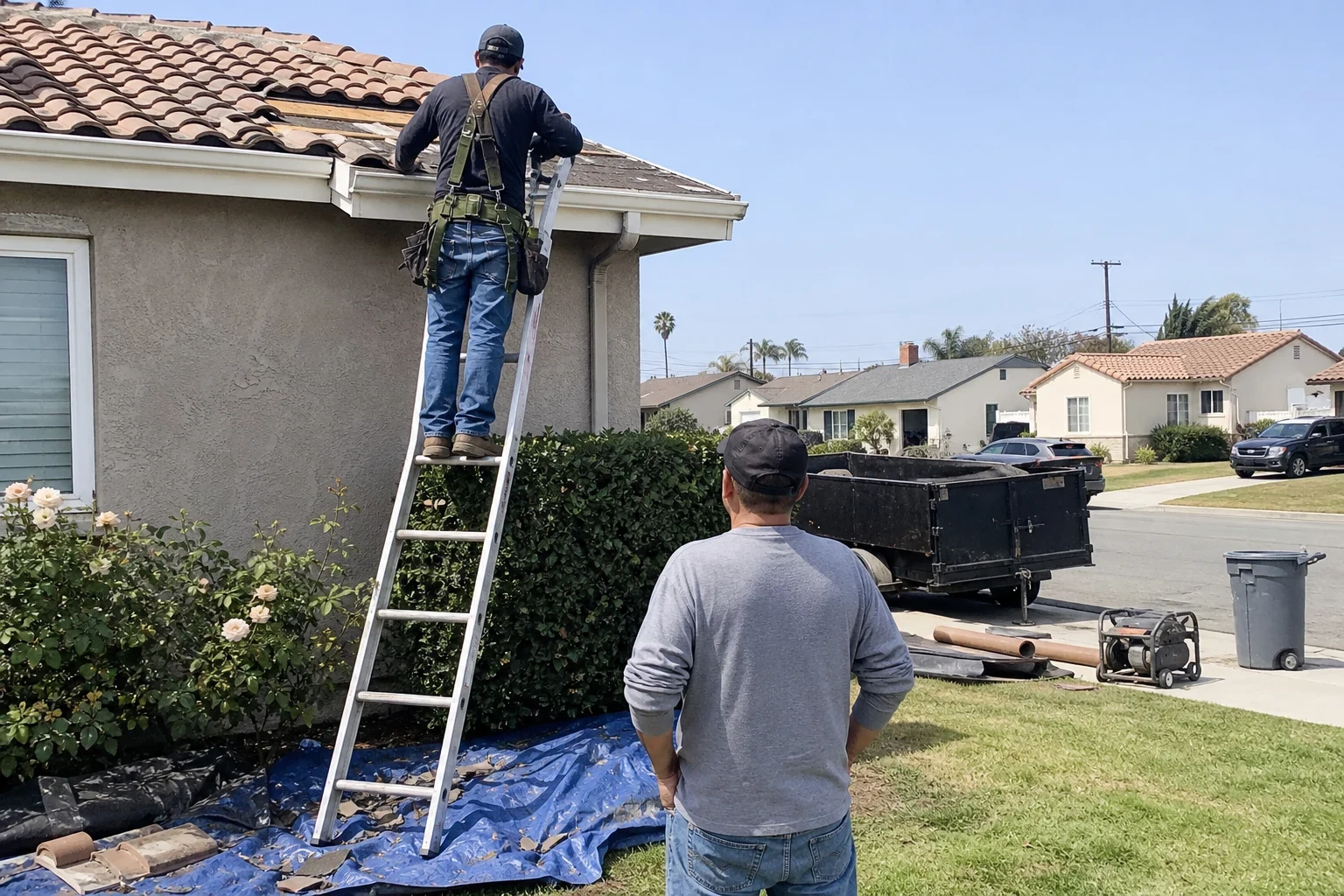
Only with careful footing. Stepping in the wrong place cracks tile, which often leads to new leaks after other trades have been on the roof. Our crew steps only on the supported points of each tile and replaces any that break.
Should I switch from tile to shingles?
Sometimes, mainly when cost is the priority, though tile lasts longer and keeps your home's look. We can price both on your estimate. Our Asphalt Shingle Roofing page covers that decision.
Will insurance cover damage to my tile roof?
It depends on your policy and the cause. Sudden damage, like tiles cracked by a fallen limb or high wind, is often covered, while aging usually is not. We work directly with your insurance claim and provide photos, and your adjuster makes the coverage decision.
Find Out What Your Tile Roof Needs
We serve Signal Hill, Long Beach, Lakewood and the surrounding area. One visit tells you whether a repair, a relay or new tile is the right step, with photos and a written estimate.